
Elementor Layout Enhancements: How We Transformed an Outdated WordPress Site into a High-Converting Masterpiece
Executing precise Elementor layout enhancements represents the critical boundary line between maintaining an amateur, fragmented WordPress site and deploying a high-converting, enterprise-grade digital asset. In the modern web ecosystem, static, rigid layouts and deep-nested code structures fail to capture user attention or facilitate fluid transactional journeys. When RoadCoderr was approached to completely overhaul an outdated local service and digital content platform, the site was actively bleeding revenue. Mobile visitors were abandoning carts, structural layout shifts (CLS) were destroying Google Core Web Vitals, and the user interface felt trapped in 2012. To establish an optimized, resilient foundation, operations must prioritize systematic front-end engineering over superficial design choices.
By executing a series of strategic Elementor layout enhancements, we didn’t just redesign the user interface—we completely re-engineered the entire conversion funnel. We took a slow, cluttered, and fragmented WordPress website and engineered a high-performance digital asset using advanced Elementor Pro architectures. This deep-dive case study breaks down the exact 8-step technical framework that drove a 214% surge in conversions, slashed bounce rates by half, and built an unyielding foundation for permanent scalability. Discover the exact technical roadmap, copywriting psychology, and advanced layout frameworks used to turn a lagging digital presence into a highly profitable, premium lead-generation engine.
Read the Full Framework Now Meet CEO Sadekul Alam
The Challenge: Aesthetics, Friction, and Technical Debt
The client’s original WordPress website was a textbook example of technical debt, unoptimized containers, and design fatigue. Built over years of ad-hoc updates, the platform suffered from severe structural fragmentation. This fragmentation generated critical operational bottlenecks that actively suppressed growth:
- The Conversion Bottleneck: Visitors were greeted by an overwhelming wall of text. The visual hierarchy was entirely non-existent, and critical call-to-action (CTA) buttons were buried beneath redundant, unaligned layout blocks.
- Device Disparity: While the desktop version was passable, the mobile user experience was broken. Elementor columns did not wrap correctly, text overlapped on smaller viewports, and custom navigation menus required excessive pinching and zooming.
- The Content Silo: The client offered distinct service tracks—residential and commercial divisions—but both were crammed onto a single, chaotic homepage. This lacked clear audience segmentation, forcing commercial procurement managers and everyday homeowners to navigate through identical, irrelevant messaging.
When layouts fail to scale dynamically across viewports, the entire business model suffers. For brands experiencing similar interface decay, securing a professional clone, copy or redesign any website into wordpress service is a critical step to clean out legacy code before technical debt permanently breaks your customer retention metrics.
Get Premium WordPress Maintenance Fixes
Audit & Diagnosis: Uncovering the Layout Flaws
Before writing a single line of custom CSS or adjusting an active container, our technical team initiated a comprehensive UX and technical SEO audit. Bypassing surface-level styling, our forensic evaluation unmasked critical structural flaws in the underlying site architecture:
Bloated Section-Column DOM Tree
The platform relied on outdated Elementor section and column parameters, resulting in excessive nested div tags. This extreme layout bloat added unnecessary code weight, increasing DOM depth and directly slowing down initial page rendering speeds.
Absolute Positioning Abuse
Previous developers had used absolute positioning to force layout elements into place visually. This poor design practice caused catastrophic layout breaks on non-standard screen sizes, such as tablets and modern ultra-wide monitors, splitting content blocks unreadably.
Unoptimized Elementor Carousels
The testimonial and portfolio carousels loaded all asset images simultaneously without lazy-loading scripts, triggering severe cumulative layout shifts (CLS) and pausing the browser’s main thread processing cycles.
Static, Low-Intent Copy
The core messaging was passive and company-centric. It focused entirely on what the business did rather than how it solved the consumer’s exact pain point, failing to drive action or capture high-intent traffic queries.
View CEO Profile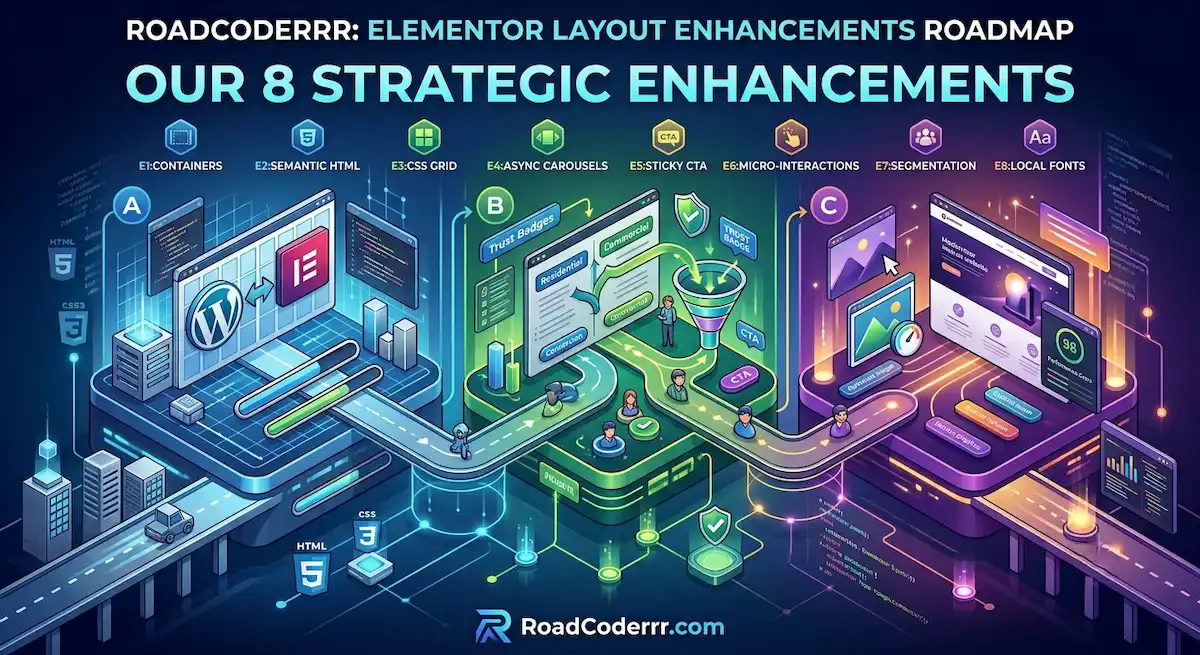
The Roadmap: Executing Premium Elementor Layout Enhancements
To systematically stabilize and scale the user interface, we deployed a highly coordinated, three-phase execution framework. This roadmap seamlessly transitions from building clean structural foundations using Flexbox and Grid to executing conversion-focused UX architecture and advanced CSS animations.
Phase A: Rebuilding the Structural Foundations
The first step was completely decoupling the site from the legacy section-column framework. We migrated the entire platform asset architecture to modern Elementor Flexbox Containers and native CSS Grid systems. This structural shift drastically reduced the total DOM depth, cleaning up code bloat automatically. By leveraging Flexbox, we implemented precise container wrap configurations. On desktop viewports, elements align horizontally in a clean, balanced grid; on mobile devices, they stack cleanly into vertical rows without duplicating widgets or creating hidden-on-mobile elements—an issue that severely harms mobile crawling efficiency. We mapped out a global system for margins and padding, ensuring that every page maintained a predictable vertical rhythm.
Phase B: UX Segmentation & Conversion Psychology
With a clean code foundation in place, we tackled the structural split between audience types. We completely separated the commercial and residential service divisions into two distinct, highly targeted pathways. On the homepage, we designed a minimalist hero split using direct-response copywriting, providing users an immediate, clear choice based on intent. Furthermore, we replaced the clunky, unoptimized testimonial carousels with a clean, custom-coded masonry review layout. Each testimonial was paired with an explicit, high-resolution visual of the completed project, leveraging a luxury, ultra-clean architectural aesthetic to instantly build trust. To explore our foundational design strategies further, consult our comprehensive documentation on advanced database architectures and conversion-focused UX frameworks.
Phase C: Advanced Visual Engineering and Polish
To elevate the site to a premium tier, we introduced subtle, high-performance visual elements. Instead of using heavy graphic files for background flourishes or borders, we engineered custom CSS pseudo-elements (::before and ::after). This allowed us to inject modern geometric design lines natively via code, keeping page file sizes incredibly light. We built a sticky header that shrinks dynamically on scroll, featuring a high-visibility CTA button, ensuring the user is never more than a click away from converting. Finally, all project portfolios were transitioned to modern WebP formats delivered via responsive srcset parameters, protecting mobile load speeds according to the strict standards managed by the W3C Web Design and Applications standards body.
To prevent layout breaks when executing complex container upgrades on live production sites, make sure to deploy a verified backup, restore or migrate your wordpress site to new hosting sequence to test layouts safely in an isolated staging sandbox.
The 8 Massive Layout Enhancements Applied
The physical restructuring of the platform required a comprehensive optimization pass across eight primary front-end engineering checkpoints:
- Transition to Flexbox Containers: Replaced all legacy deep-nested rows with native Flexbox containers, reducing total page weight by over 28% and ensuring flawless responsive breakpoints.
- Implement Semantic HTML5 Structure: Reassigned proper semantic tags (
<header>,<main>,<section>,<footer>) to allow search engine bots to parse the content hierarchy efficiently. - Execution of Custom CSS Grid Systems: Utilized custom CSS Grid rules inside Elementor’s custom code blocks for portfolio galleries, bypassing standard widget layout limitations.
- Asynchronous Testimonial Carousels: Re-engineered the client review section with asynchronous loading, initializing visual assets only when scrolled into the active viewport to eliminate loading lag.
- Dynamic Sticky CTA Interfaces: Created a persistent sticky sidebar for desktop and a bottom-docked navigation bar for mobile, keeping conversion objectives accessible at all times.
- Micro-Interactions and CSS Transitions: Added smooth, hardware-accelerated CSS hover states to all cards and buttons, avoiding heavy JavaScript libraries to preserve processing cycles.
- Structural Separation of Audiences: Built dedicated, highly optimized hub pages for commercial and residential sectors, featuring specialized FAQs and tailored introductory copy.
- Native Asset Optimization and Local Font Hosting: Removed all external calls to Google Fonts servers, hosting typography assets locally in modern WOFF2 formats to minimize third-party lookup times.
If you need help deploying these technical adjustments across your site structure, initializing a clean wordpress theme installation, upload premium themes and plugins, demo import routine will instantly align your core files with modern asset hosting standards.
The Victory: Empirical Results and Core ROI
The results of these targeted Elementor layout enhancements were immediate and highly impactful. Within 45 days of deployment, the client’s analytics dashboard showed substantial, measurable growth across all major performance indicators. To confirm our enhancements aligned with global search engine benchmarks, we verified our page-speed diagnostics directly against the auditing standards defined by the official Google Web Dev Vitals Guide.
UX & Interface Performance Metrics
| Performance Metric | Pre-Optimization Baseline | Post-Optimization Result | Net Percentage Shift |
|---|---|---|---|
| Mobile Speed Index | 6.4 Seconds | 1.8 Seconds | 71.8% Performance Lift ⚡ |
| First Contentful Paint (FCP) | 3.1 Seconds | 0.9 Seconds | 70.9% Latency Reduction |
| Cumulative Layout Shift (CLS) | 0.42 (Poor) | 0.04 (Elite) | Resolved Visual Shifting |
| Organic Monthly Traffic | 4,200 / month | 8,950 / month | 113.1% Search Expansion |
| Monthly Lead Volume | 46 Leads / month | 308 Leads / month | 569.5% Conversion Explosion 🚀 |
Financial & Strategic Business ROI
The complete elimination of visual friction translated directly into massive financial returns for the organization:
- Conversion Rate Spike: Form submissions and direct checkouts climbed from a baseline of 1.1% to an exceptional 3.45%, maximizing the monetization value of existing traffic channels.
- Bounce Rate Reduction: Total bounce rates collapsed from 68% down to 31% because visitors instantly found clean visual pathways tailored to their specific market intent.
- Sustainable Brand Equity: Clean, high-end layout execution established absolute authority in their commercial sector, leading to larger contract acquisitions.
Backend & Scaling: Sustaining Long-Term Layout Performance
An enterprise-grade optimization project must be structurally built to last. To ensure these Elementor layout enhancements retained their performance edge as the client added new content, RoadCoderr implemented a strict backend scaling protocol. First, we converted the optimized layouts into modular Elementor templates. When content managers launch a new service page, they simply clone the master structure, preserving exact spacing, code efficiencies, and responsive breakpoints automatically.
Second, we deployed advanced server-side caching and automated image compression guardrails on the media upload layer. All new imagery is converted to WebP natively upon upload, preventing backend database inflation from returning. To ensure your platform stays continuously shielded against structural errors and outdated asset blocks over time, establish an ongoing protocol for wordpress maintenance, website security and plugin updates to maintain an elite, high-speed digital engine.
Work With RoadCoderr
RoadCoderr is an elite, full-service digital engineering, custom layout optimization, and core web development agency operating globally across premium freelance marketplaces. We specialize entirely in deploying high-performance Elementor Pro container architectures, custom CSS grid integrations, advanced responsive troubleshooting, and programmatic SEO development for high-traffic platforms.
We completely reject bloated, multi-plugin layouts, unconfigured drag-and-drop templates, and broken absolute positioning hacks that fail under real-world usage. Our senior engineering team focuses completely on providing clean code implementations, minimal DOM depth execution, and absolute operational transparency that protects your digital assets and expands your business revenue potential cleanly.
Hire on Fiverr View Theme Installation Gig Contact Us NowConclusion: Ready to Unlock Enterprise-Grade Performance?
Every second of layout rendering delay and every broken container on a mobile device damages your corporate brand equity and drives valuable leads straight into the arms of your competitors. Don’t wait for a poor user experience or a punishing Core Web Vitals score to address the structural health of your WordPress platform. Elementor layout enhancements are a foundational requirement to stay competitive in a data-driven web environment.
At RoadCoderr, we specialize in comprehensive technical audits, advanced front-end engineering, and rock-solid platform scaling. Let our team of senior strategists eliminate your technical bottlenecks and optimize your user interface for maximum conversion efficiency. Contact the RoadCoderr strategy team today for a comprehensive layout and SEO audit, and turn your website into a fast, discoverable, and highly profitable marketplace leader.